google.com, pub-4358400797418858, DIRECT, f08c47fec0942fa0 Photomythus google.com, pub-4358400797418858, DIRECT, f08c47fec0942fa0

The giants of photography: Henri Cartier-Bresson

 Henri Cartier-Bresson (1908-2004) was a French photographer and one of the pioneers of modern photojournalism. He is widely regarded as one of the greatest photographers of the 20th century and is known for his candid and decisive moment photography.

Cartier-Bresson was born on August 22, 1908, in Chanteloup-en-Brie, France. He developed an early interest in painting and studied art in his youth. However, it was during a trip to Africa in 1931 that he discovered his passion for photography after receiving a small 35mm camera as a gift.

In 1932, Cartier-Bresson traveled to Mexico and the United States, capturing scenes of everyday life with his camera. He then returned to Europe and became involved in the Surrealist art movement, where he honed his skills in capturing spontaneous and surreal moments in his photographs. He sought to document the essence of human experience through his images.

In 1947, Cartier-Bresson co-founded the renowned Magnum Photos agency along with Robert Capa, David Seymour, George Rodger, and William Vandivert. Magnum Photos became a cooperative agency that allowed photographers to retain control over their work and pursue their individual projects. Through Magnum, Cartier-Bresson covered significant events around the world, including the Spanish Civil War, the partition of India, the Chinese Revolution, and the Soviet Union after Stalin's death.


Cartier-Bresson's photographic style was characterized by his ability to capture the "decisive moment." He would patiently wait for the perfect alignment of elements within the frame and then press the shutter at precisely the right instant to capture a fleeting and meaningful moment. His photographs often portrayed the human condition, combining a strong sense of composition, geometry, and storytelling.

He worked primarily with a Leica 35mm camera, which allowed him to be discreet and agile in his photography. Cartier-Bresson believed in the importance of capturing the spontaneity and authenticity of a scene without interfering or staging it. He described his approach as being "a visual hunter" who was constantly observing the world around him.

Cartier-Bresson published several books throughout his career, including "The Decisive Moment" (1952), which is regarded as one of the most influential photography books of all time. His work has been exhibited worldwide, and his contributions to the field of photography have had a lasting impact on generations of photographers.

Henri Cartier-Bresson passed away on August 3, 2004, in Céreste, France, leaving behind a vast body of work that continues to inspire and influence photographers to this day. His legacy as a master of photography and his ability to capture the fleeting moments of life have solidified his place in the history of the medium.

The giants of photography: Diane Arbus

 Diane Arbus (1923-1971) was an American photographer known for her compelling and often controversial images that focused on people living on the margins of society. She is considered one of the most influential photographers of the 20th century and made significant contributions to the field of documentary photography.

Arbus was born on March 14, 1923, in New York City. She grew up in a wealthy and artistic family, and her parents owned a department store. In the 1940s, she married Allan Arbus, and the couple started working together as fashion photographers. However, Diane felt constrained by the commercial work and eventually pursued her own artistic vision.

In the late 1950s, Arbus began photographing people in marginalized communities, such as circus performers, giants, transgender individuals, nudists, and people with physical and intellectual disabilities. Her images often portrayed her subjects with a raw and unflinching gaze, capturing their vulnerability and humanity. Arbus had a unique ability to establish a connection with her subjects, and her photographs revealed a sense of intimacy and empathy.


Arbus used a square format 6x6 camera and made use of natural light to create her signature style. She was known for her meticulous attention to detail and spent a significant amount of time with her subjects, getting to know them before taking their photographs. Arbus' images challenged conventional notions of beauty and normalcy, and she aimed to show the diversity and complexity of human experience.

During her career, Arbus's work appeared in various exhibitions, including the Museum of Modern Art in New York City. She also published two books of her photographs: "Diane Arbus: An Aperture Monograph" (1972) and "Diane Arbus: Revelations" (2003), which provided insights into her artistic process and personal life.

Despite her artistic success, Arbus struggled with depression throughout her life. Tragically, she took her own life on July 26, 1971, at the age of 48. Her work continues to have a profound impact on contemporary photography, challenging societal norms and raising questions about the nature of identity, beauty, and the human condition.

The giants of photography: Richard Avedon

 Richard Avedon (1923-2004) was a highly influential American fashion and portrait photographer known for his distinct and innovative approach to capturing the essence and personality of his subjects. He was born on May 15, 1923, in New York City.

Avedon's passion for photography emerged during his teenage years when he began taking pictures with a Kodak Brownie camera. He honed his skills while serving as a photographer in the Merchant Marine during World War II. After the war, he briefly studied photography at The New School in New York City.

In the 1940s, Avedon started working as a freelance fashion photographer for Harper's Bazaar. His fresh and dynamic style quickly garnered attention, and he became renowned for his ability to bring movement and vitality to fashion photography. His images stood out from the traditional static poses of the time.

Avedon's unique approach emphasized capturing his subjects in action, often using unconventional settings and dramatic lighting. He introduced a sense of spontaneity and naturalness to his fashion photography, revolutionizing the industry. His work appeared in leading fashion magazines, including Vogue and Life, and he collaborated with renowned designers such as Christian Dior and Coco Chanel.


Beyond fashion photography, Avedon was acclaimed for his exceptional portrait work. His portraits were characterized by their minimalist style, often featuring a plain white backdrop that allowed the subjects' expressions and personalities to take center stage. Avedon had a remarkable ability to establish an intimate connection with his subjects, capturing their vulnerabilities, emotions, and inner lives. His iconic portraits included influential figures from various fields, including artists, politicians, musicians, and actors.

In addition to his commercial success, Avedon pursued personal projects that delved into social and political issues. He documented the civil rights movement, the Vietnam War, and various marginalized communities, capturing the human stories behind these significant events.

Avedon's artistic contributions extended beyond photography. He published several books, including "Observations" and "In the American West," which showcased his evocative portraits and social documentary work. He also worked in other artistic mediums, such as filmmaking and theater.

Richard Avedon received numerous awards and accolades throughout his career, including the International Center of Photography's Master of Photography Award and the Royal Photographic Society's Special 150th Anniversary Medal and Honorary Fellowship. His work continues to be celebrated for its innovation, artistic vision, and profound impact on the fields of fashion and portrait photography.

Richard Avedon passed away on October 1, 2004, in San Antonio, Texas. His enduring legacy as one of the most influential photographers of the 20th century lives on through his remarkable body of work, which continues to inspire and captivate audiences worldwide.

The giants of photography: Ansel Adams

 Ansel Adams (1902-1984) was an influential American photographer and environmentalist renowned for his black-and-white landscape photography. He was born on February 20, 1902, in San Francisco, California. Adams initially developed an interest in music and played the piano, but his passion for nature and the outdoors eventually led him to photography.

Adams' journey as a photographer began in the 1920s when he joined the Sierra Club, an organization dedicated to environmental preservation. His first experiences in the Sierra Nevada mountains had a profound impact on his artistic vision and lifelong commitment to capturing the beauty of the natural world.

Adams was known for his technical mastery and meticulous approach to photography. He was a pioneer in the use of large-format cameras, particularly his preferred camera, the 8x10 view camera, which allowed him to produce highly detailed and sharp images. He meticulously planned his shots, considering composition, lighting, and exposure to create his signature style of breathtaking landscapes.


Throughout his career, Adams produced numerous iconic images, including "Moonrise, Hernandez, New Mexico" and "The Tetons and the Snake River." His photographs often showcased the grandeur of the American West, particularly national parks such as Yosemite, which became one of his favorite subjects.

In addition to his work as a photographer, Adams was an advocate for the conservation of wilderness areas. He believed that photography had the power to inspire environmental awareness and activism. Adams co-founded Group f/64, a collective of photographers dedicated to promoting the value of photography as an art form.

Adams also contributed significantly to the field of photography as an educator and writer. He taught workshops and wrote several instructional books, including his renowned trilogy, "The Camera," "The Negative," and "The Print," which are still widely regarded as essential references for photographers today.

Ansel Adams received numerous accolades and honors during his lifetime, including a Presidential Medal of Freedom in 1980. His photographs continue to captivate audiences with their exquisite beauty, technical excellence, and profound appreciation for the natural world.

Ansel Adams passed away on April 22, 1984, in Monterey, California, leaving behind a rich legacy as one of the greatest photographers in history. His work continues to inspire photographers and nature lovers alike, reminding us of the importance of preserving and cherishing our environment.

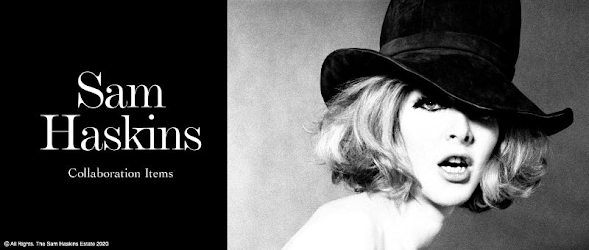
The giants of photography: Sam Haskins

 Sam Haskins (1926-2009) was a renowned British photographer and artist known for his innovative and influential work in the field of fashion and fine art photography. He gained international recognition for his iconic and groundbreaking photography books, which pushed the boundaries of traditional fashion and nude photography.

Born on November 11, 1926, in Johannesburg, South Africa, Haskins studied at the Johannesburg School of Art and then moved to London in the early 1950s. He initially worked as an advertising photographer before branching out into fashion and fine art photography.


In the 1960s and 1970s, Haskins achieved significant success with his photography books. His first book, "Five Girls" (1962), featured a series of provocative and stylish black-and-white images of women. It was followed by "Cowboy Kate & Other Stories" (1964), which became his most famous and influential work. The book combined fashion, storytelling, and innovative composition, featuring a female model in a Western-themed narrative. "Cowboy Kate" broke new ground in fashion photography, with its unconventional angles, double-page spreads, and cinematic storytelling approach.

Haskins continued to produce a series of highly regarded books, including "November Girl" (1966), "Haskins Posters" (1969), and "Photo Graphics" (1976), among others. His work often incorporated elements of surrealism, abstraction, and graphic design, showcasing his versatility and artistic vision.

Throughout his career, Sam Haskins received numerous awards and honors for his contributions to photography. His work has been exhibited in galleries and museums worldwide, and he has inspired generations of photographers with his innovative approach and artistic vision.

Sam Haskins passed away on November 26, 2009, in Bowral, New South Wales, Australia, leaving behind a legacy of influential and groundbreaking photography. His work continues to be celebrated and appreciated by photography enthusiasts, collectors, and artists alike.

Guanti per fotografare in climi freddi

 Quando si fotografa in climi freddi, è importante tenere le mani calde e protette per garantire una presa sicura sulla fotocamera e la possibilità di regolare le impostazioni senza problemi. Ecco alcuni tipi di guanti adatti per fotografare in climi freddi:

  1. Guanti senza dita o con dita convertibili: Questi guanti sono progettati con le dita scoperte o con le dita che possono essere aperte e richiuse con cerniere o alette. Consentono di avere una maggiore sensibilità al tatto e un facile accesso ai comandi della fotocamera, mantenendo al contempo il resto delle mani al caldo. Tuttavia, potresti dover mettere i guanti completi tra uno scatto e l'altro per mantenere le mani completamente al caldo.
  2. Guanti a doppio strato: Questi guanti hanno un rivestimento esterno impermeabile o resistente al vento per proteggere le mani dagli elementi, mentre all'interno hanno un sottile strato isolante per mantenere il calore. Possono essere più spessi dei guanti senza dita, ma offrono una maggiore protezione contro il freddo intenso.
  3. Guanti con sensibilità touchscreen: Alcuni guanti sono progettati con materiali che consentono di utilizzare schermi touchscreen, come quelli delle fotocamere o degli smartphone, senza dover rimuovere i guanti. Questa caratteristica è utile per regolare le impostazioni o visualizzare le foto senza dover esporre le mani al freddo.
  4. Guanti con tasche riscaldanti: Alcuni guanti includono tasche integrate che possono contenere inserti riscaldanti, come pacchetti di calore. Questo aiuta a mantenere le mani calde anche nelle condizioni più fredde.
  5. Guanti termici: I guanti termici sono progettati per mantenere le mani al caldo in condizioni estreme. Sono realizzati con materiali isolanti e spesso hanno uno strato impermeabile per proteggere dall'umidità. Tuttavia, potrebbero essere più spessi e meno flessibili rispetto ad altri tipi di guanti, limitando la sensibilità al tatto.

Quando scegli i guanti per fotografare in climi freddi, considera anche la presa. Opta per guanti che offrano una buona aderenza sulla fotocamera per evitare scivolamenti accidentali.

Ricorda che è sempre utile provare diversi modelli di guanti per trovare quelli che si adattano meglio alle tue esigenze personali e alla fotocamera che stai utilizzando.